Sore after lifting: when to recover and when to stop
How ordinary soreness after an unfamiliar workout differs from pain that needs assessment, with practical decisions for the next session.


A new squat session can leave your thighs tender the next day. That can be a normal response to unfamiliar work. But pain is not a progress report, and a symptom that changes how you walk or comes with weakness deserves a different decision from ordinary tenderness.
If you have severe muscle pain, unusual weakness or dark tea- or cola-colored urine after exertion, seek urgent medical care. CDC/NIOSH lists these as signs of rhabdomyolysis, a condition that cannot be ruled out by how athletic you are or how much water you drank (CDC/NIOSH).
Cover illustration: Decide on the next session by how you move and recover, not by whether soreness proves effort.
Soreness is not the goal
An unfamiliar movement or a jump in training volume can make a muscle feel tender later. A workout that leaves you comfortable can still help you improve; ACSM's soreness guidance explains that pain is not required for progress (ACSM handout). Separately, the 2026 ACSM review found that taking sets to momentary failure and intricate programming did not consistently improve outcomes for the average healthy adult (ACSM review).
If this was your first week back, write down what you did. Were there more sets than usual? Did you add a new exercise? That record helps you make the next session manageable. Avoid testing your old maximum while learning how you respond.
Make the next session easier to judge
If soreness is mild, improving and you can move normally, an easy walk or a lighter session may be reasonable. You could also work a different set of muscles. ACSM advises avoiding activity that worsens severe symptoms and distinguishes mild activity from pushing through painful exercise (ACSM handout). There is no fixed number of rest days that fits everyone. If a movement reproduces sharp pain, changes your gait or is getting worse instead of better, stop that movement and ask a clinician or physical therapist for advice.
The NIDDK advises people starting activity to begin slowly and increase gradually. Applying that principle to lifting means changing a small part of a session at a time, such as adding repetitions before adding a great deal of weight or volume (NIDDK). This is a pacing suggestion, not a test for the cause of pain.
Know the urgent pattern
Rhabdomyolysis involves damaged muscle releasing substances into the blood and can harm the kidneys. CDC/NIOSH flags muscle pain or cramps more severe than expected, feeling weak or tired, and dark urine. Symptoms may not all appear at once. A clinician can assess symptoms and order tests such as creatine kinase; you cannot confirm or dismiss it by looking at a training log (CDC/NIOSH).
Seek urgent care for that pattern, especially after a hard or unfamiliar workout. For a suspected injury, swelling, a joint that will not bear weight or pain that persists, stop training the painful area and seek assessment. Stop exercising immediately if chest pain, fainting or unusual breathlessness occurs. For possible heart-attack symptoms, including new unexplained chest pain, call 911 rather than waiting for an appointment (NHLBI). Other new symptoms still need urgent assessment.
An ordinary next workout should be possible without negotiating with pain. Once you can move comfortably again, resume at a level you can repeat; our strength-training return guide gives a simple starting structure.
Frequently asked questions
Should I lift through sore muscles?
Mild, improving soreness may allow an easier session or work on other muscles. Severe pain, loss of function or worsening symptoms call for stopping and getting advice. There is no need to prove you can tolerate pain.
Does soreness mean the workout worked?
No. Soreness after an unfamiliar session says little by itself about how much strength or muscle you will gain. Consistent training matters more than trying to feel sore.
When is dark urine urgent?
Dark tea- or cola-colored urine with muscle pain or weakness after exertion is a warning sign for rhabdomyolysis. Seek urgent medical care; do not wait to see whether it resolves after another workout.
References
- Delayed Onset Muscle Soreness · American College of Sports Medicine, educational handout
- Heart Attack Symptoms · National Heart, Lung, and Blood Institute
- Rhabdomyolysis · CDC/NIOSH
- Tips for Starting Physical Activity · National Institute of Diabetes and Digestive and Kidney Diseases
- Resistance Training Prescription for Muscle Function, Hypertrophy, and Physical Performance in Healthy Adults: An Overview of Reviews · American College of Sports Medicine, 2026
Read next

Tired after every workout: check sleep before adding more training
A practical sleep check for men who lift, including when snoring, gasping or daytime sleepiness needs assessment rather than another supplement.
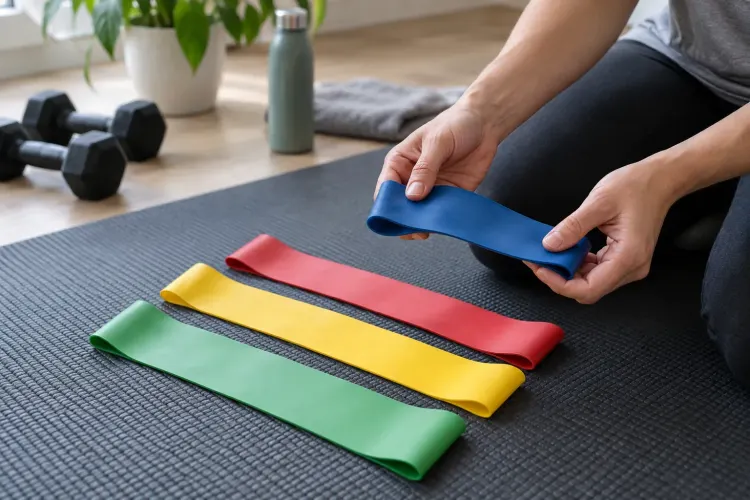
Getting stronger with resistance bands: track more than the color
Make a home band workout repeatable, know when to progress it, and check the equipment without treating a color as a universal weight.

Strength training has stalled: what to check before changing programs
Use your training record to separate one bad session from a plateau, then change a manageable part of the plan without chasing soreness.