Tired after every workout: check sleep before adding more training
A practical sleep check for men who lift, including when snoring, gasping or daytime sleepiness needs assessment rather than another supplement.

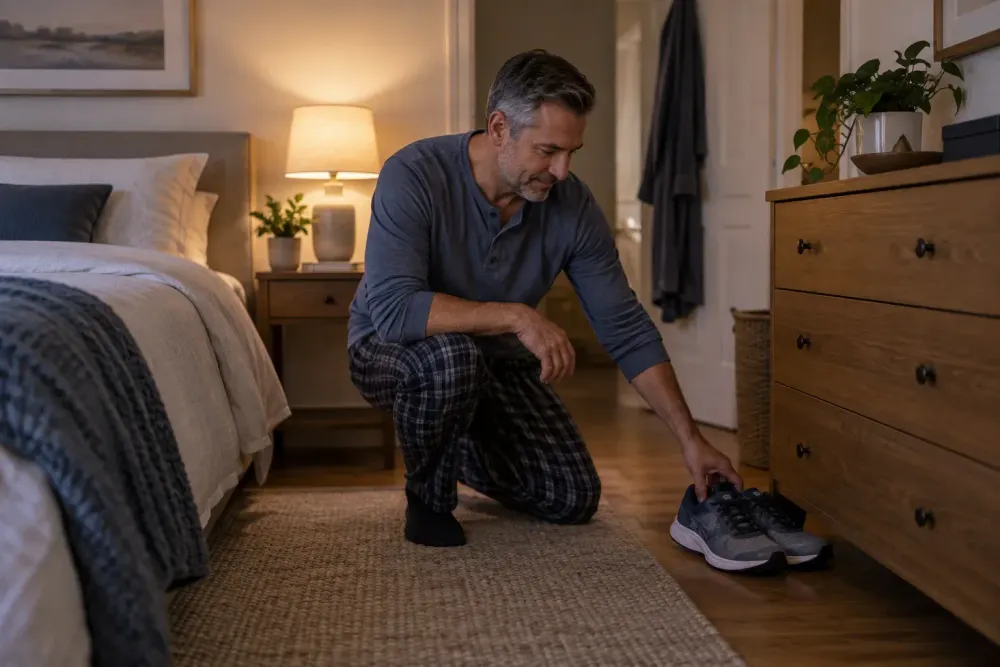
If every workout leaves you exhausted, check how much you actually sleep before adding another training day or supplement. For adults aged 18 to 60, CDC recommends at least seven hours nightly, but adequate time and refreshing sleep are separate questions (CDC).
Cover illustration: Include sleep opportunity in the training plan. This scene illustrates a routine, not measured recovery.
Put the sleep record next to the training record
For several days, note when you go to bed, roughly when you fall asleep, waking during the night and when you get up. Add exercise timing, naps and caffeine. A diary like this helps a clinician see the pattern rather than relying on “I think I sleep enough” (CDC).
Look for practical conflicts. A late shift followed by an early gym session leaves little room for sleep even when your intention is good. If you can change one part of the schedule, choose something repeatable. This is a planning exercise, not a test that can diagnose the cause of fatigue.
Our training-plateau guide explains how to compare sessions. Put recovery conditions in that comparison instead of assuming that a stalled lift means you need a harder program.
Sleep quality can be the missing detail
Frequent loud snoring, witnessed breathing pauses or gasping during sleep can be signs of sleep apnea. Daytime sleepiness may be the symptom you notice, even if someone else first spots the breathing pattern. NHLBI advises discussing these symptoms with a healthcare provider; a sleep study may be needed (NHLBI).
A partner's observation is useful information, not a diagnosis. Likewise, a watch's sleep score does not replace clinical assessment. Tell the clinician whether you wake unrefreshed and whether sleepiness affects work, driving or the ability to concentrate. Avoid driving when you are too sleepy to do so safely.
Make changes you can evaluate
CDC suggests a consistent bedtime and wake time, a quiet cool room, less screen use before bed and avoiding caffeine in the afternoon or evening. Choose a change that fits your circumstances instead of building a ritual that is impossible on working days (CDC).
This does not establish an exact number of extra training gains for each extra hour of sleep, and it does not guarantee that fatigue is caused by poor sleep. If you continue to feel unusually exhausted despite enough opportunity to sleep, get assessed. Persistent fatigue has several possible explanations, covered in our fatigue guide.
Bring both records to that visit: training load and sleep pattern. A clinician can then decide whether the next step is changing the schedule, investigating a sleep disorder or looking for another cause. Escalating caffeine or exercise while the symptoms worsen makes the pattern harder to understand.
Frequently asked questions
Is seven hours in bed the same as seven hours asleep?
No. Time awake before sleep and during the night reduces actual sleep. Quality matters too, including whether sleep is refreshing.
Can loud snoring be part of the problem?
Yes, especially with witnessed pauses in breathing, gasping or daytime sleepiness. These signs warrant discussion with a healthcare professional and may lead to a sleep study.
References
- About Sleep · Centers for Disease Control and Prevention
- Sleep Apnea Symptoms · National Heart, Lung, and Blood Institute
Read next
Getting stronger with resistance bands: track more than the color
Make a home band workout repeatable, know when to progress it, and check the equipment without treating a color as a universal weight.

Strength training has stalled: what to check before changing programs
Use your training record to separate one bad session from a plateau, then change a manageable part of the plan without chasing soreness.

Sore after lifting: when to recover and when to stop
How ordinary soreness after an unfamiliar workout differs from pain that needs assessment, with practical decisions for the next session.