Testosterone & Hormones
The hormones that shape a man's health, explained without the hype. What testosterone actually does, what low levels mean, how it is tested, and where the marketing gets ahead of the evidence.
Testosterone is the hormone men hear most about and understand least, mostly because the loudest voices in the subject are selling something. This hub covers what the hormone does, what a low result means, how far the levers you control can move it, and where treatment fits.
What you will not find here is a promise that a supplement, a food or a routine will transform your levels. The likely range of movement is well measured, and most of it comes from weight, sleep and treating the conditions underneath a low reading.
All guides in this hub

TRT explained honestly: who it helps, what it costs, what to ask
Testosterone replacement is a real treatment for a real diagnosis. What the trials show it does and does not fix, the trade-offs, and how to spot a bad clinic.
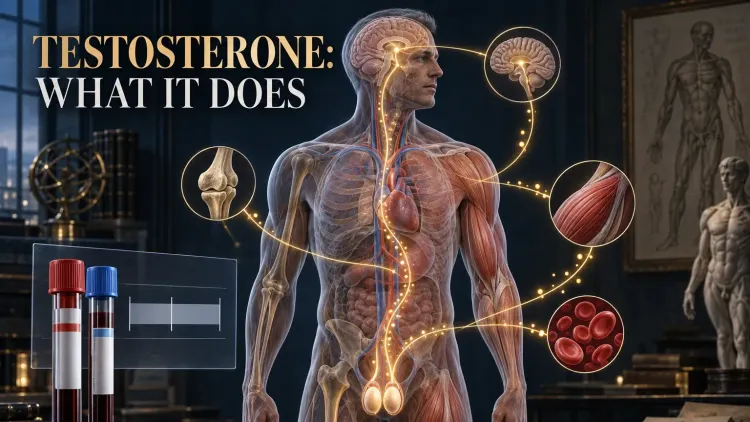
Testosterone: what it does, what is normal, and what really changes with age
Testosterone results need context. Learn what the hormone does, how total and free levels differ, what ranges mean and when repeat testing is useful.

How to raise testosterone naturally: what the evidence supports
How to confirm low testosterone and address weight, sleep, alcohol, medicines and deficiencies without relying on unsupported booster claims.
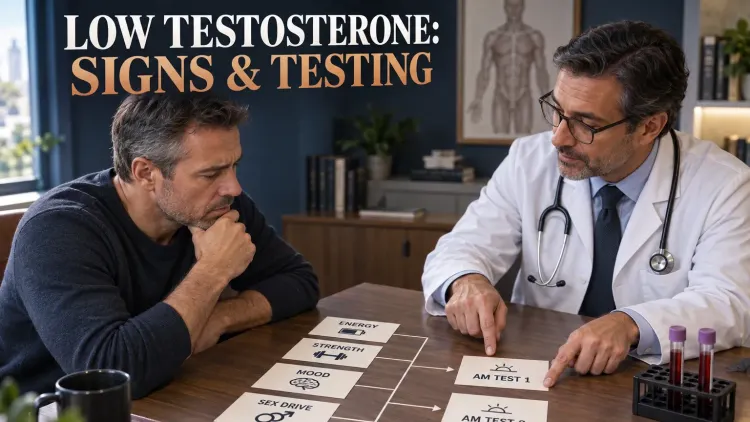
Signs of low testosterone: what they mean and when to get tested
The signs of low testosterone in men, why they are easy to misread, and how the diagnosis is confirmed. Test before you assume.
Where to start
- Signs of low testosterone Start here if symptoms brought you. It separates the signs that point at testosterone from the ones that point somewhere else.
- The testosterone blood test Read this before booking anything. How the test is done decides whether the number means anything.
- Raising testosterone naturally The measured effect of each lever, in the units the studies used.
What this hub answers
- What counts as low testosterone?
- The AUA uses total testosterone below 300 ng/dL as a reasonable supporting cut-off, but diagnosis also requires compatible symptoms or signs and two separate early-morning tests. Other guidelines rely on consistently and unequivocally low results interpreted with an accurate assay and its reference range rather than one universal number.
- Can I raise it without medication?
- Sometimes, and the gains track what caused the low level. Losing excess weight and fixing sleep are the two levers with real measured effects; supplements sold for the purpose are not.
- Does testosterone drop sharply with age?
- It declines gradually, roughly 1% a year after the thirties, which is slow enough that a sudden change deserves a different explanation.