How to build muscle: the training variables that matter
Sets per week, how often you train a muscle, how long you rest and how much protein you eat. What the trials show, and what to ignore.


Building muscle is simpler than fitness marketing makes it look, but it is not automatic. You need repeated resistance training, enough challenging weekly work, adequate food and protein, and a plan that can be progressed without exhausting you or aggravating your joints.
The 2026 American College of Sports Medicine position stand reviewed 137 systematic reviews involving more than 30,000 participants. Its broad message is reassuring: many different resistance-training programmes build muscle. Weekly volume matters, while equipment type, exercise complexity, periodisation and training to complete failure do not consistently decide the result (ACSM, 2026).
Start with the real training signal
Muscle growth is an adaptation to repeated mechanical loading. Progressive overload is the method used to keep that stimulus appropriate as you become stronger; it is not a separate biological mechanism and it does not mean adding weight every workout.
You can progress by adding a repetition with the same load, using a slightly heavier load for the same repetitions, adding a useful set, improving range of motion or making the same work cleaner and more controlled. The point is to create a trend over weeks. A single flat session is normal. A programme that never asks more of you across months is where progress usually stalls.

How many sets per muscle each week?
Volume is usually counted as hard working sets per muscle group per week. Warm-up sets do not count, and compound exercises can train more than one muscle. A bench press set is direct work for the chest and also contributes to the triceps and front deltoids, so set totals are estimates rather than perfect accounting.
The 2026 ACSM review found that hypertrophy was enhanced at higher weekly volumes, around 10 or more sets per muscle group. A newer dose-response meta-regression, published in 2026, also found that muscle growth generally increased with volume, with diminishing returns rather than a sharp universal threshold (Pelland and colleagues, 2026).
A practical starting point is roughly 6 to 10 challenging sets per muscle each week. Start near the lower end if you are new, returning after a break or training many muscle groups in the same session. Add sets only when performance is progressing slowly, technique is stable and you are recovering between sessions. More work is useful only while it remains productive.
How hard should each set be?
A set does not need to end in failure, but it should usually finish close enough that the final repetitions are demanding. Research that estimates repetitions in reserve suggests hypertrophy tends to improve as sets finish closer to failure, although the estimate is imprecise and the ACSM overview did not find a consistent advantage to reaching momentary failure itself (Sports Medicine, 2024).
For most working sets, stopping with about 1 to 3 good repetitions left is a useful target. Beginners often underestimate this margin, so an occasional supervised set taken safely to technical failure can help calibrate effort. You do not need to grind every set until form breaks. Failure adds fatigue and discomfort, and it is a poor bargain on heavy squats, presses and deadlifts when technique is deteriorating.
Choose a rep range you can control
Muscle can grow across a broad range of loads. A network meta-analysis of 119 trials found that many resistance-training prescriptions produced similar hypertrophy, while heavier loads were more important for maximising one-repetition strength (British Journal of Sports Medicine, 2023).
That makes roughly 6 to 15 repetitions a convenient home base rather than a magic hypertrophy zone. Heavier sets can work well for compound lifts, while moderate or higher repetitions often suit machines and isolation exercises. Very light sets generally need to be taken closer to failure to recruit enough fibres, which can make them uncomfortable before the target muscle is truly limited.
Use a controlled range of motion that suits your joints and the exercise. Full range is a sound default, but pain is not a growth signal. Persistent pain, sudden weakness, swelling or loss of function deserves assessment rather than another attempt to train through it.
Frequency organises volume
Training a muscle twice a week is practical, but it is not an independent growth multiplier. A 2024 meta-analysis found that split routines and full-body routines produced similar strength and muscle growth when weekly volume was matched (Journal of Strength and Conditioning Research, 2024).
Two weekly exposures often make it easier to distribute 8 to 12 quality sets without the later sets becoming rushed or weak. One session can still work, and three can work too. Choose the schedule that lets you repeat the movements, recover and keep the weekly total consistent.
Rest long enough to preserve the next set
The old claim that short rests are automatically better for muscle growth does not hold up. A 2024 systematic review found a small hypertrophy benefit from resting longer than 60 seconds, probably because people preserved more training volume. It found no appreciable advantage when rest extended beyond about 90 seconds, although the evidence was limited and varied between studies (Sports Medicine, 2024).
Use about 2 to 3 minutes after demanding compound sets and 1 to 2 minutes for smaller isolation exercises, then adjust by performance. If repetitions collapse or technique changes because you are breathless, rest longer. The timer serves the set; the set does not serve the timer.
A progression method that is easy to run
Pick a repetition range, such as 8 to 12, and keep the exercise and technique consistent enough to compare sessions.
- Choose a load you can lift for the bottom of the range with about 2 repetitions in reserve.
- Over the next sessions, add repetitions while keeping the same form and effort target.
- When every working set reaches the top of the range, add a small amount of load.
- Accept that repetitions may return to the bottom of the range, then build again.
Log the load, repetitions and sets. Without a record, it is easy to remember the best session and forget that most sessions have been identical.
Protein and calories
Resistance training supplies the stimulus; dietary protein supplies amino acids used to repair and build tissue. A 2018 meta-analysis found that protein supplementation modestly improved gains from resistance training, with benefits levelling off around a total daily intake of 1.6 g/kg in the average model and uncertainty extending higher (British Journal of Sports Medicine, 2018). A larger 2022 review also found small gains in lean mass from higher protein intake during resistance training (Nunes and colleagues, 2022).
For most healthy men who train, about 1.4 to 2.0 g/kg/day is a reasonable working range. At 85 kg, that is roughly 119 to 170 g each day. The lower end may be enough when calories are adequate and protein quality is high; the upper end can be useful during fat loss or when meals are less predictable. Our protein guide covers food choices, and the protein calculator converts body weight into a daily estimate.
A large calorie surplus is not required. In an eight-week study of resistance-trained people, faster body-weight gain from larger intended surpluses mainly increased skinfold thickness rather than producing clearly greater hypertrophy or strength (Sports Medicine - Open, 2023). Beginners and men with more stored body fat can sometimes gain muscle around maintenance or even during a controlled deficit. Lean, experienced lifters may find a small surplus helpful, but rapid weight gain is mostly a faster route to added fat.
Use the calorie calculator as a starting estimate, then adjust from several weeks of body-weight and waist trends rather than treating one number as exact.
Where creatine fits
Creatine monohydrate has good evidence, but it does not replace training or protein. A 2024 meta-analysis found that adding creatine to resistance training increased lean body mass by an average of about 1.14 kg compared with training alone in adults younger than 50, although lean mass measurements include water as well as contractile tissue (J Strength Cond Res, 2024).
A simple dose is 3 to 5 g daily. Loading at about 20 g/day in divided doses for 5 to 7 days fills stores faster but is optional (ISSN position stand, 2017). Creatine can increase serum creatinine, which may make creatinine-based kidney estimates look lower without proving kidney injury. A 2026 meta-analysis of randomised trials found higher serum creatinine but no significant difference in urea or estimated GFR between creatine and control groups (Journal of Renal Nutrition, 2026). Tell your clinician if you use it when kidney blood tests are ordered, and seek individual advice if you have kidney disease or another condition affecting fluid balance.
Protein powder is also useful when it solves a food problem. It is a convenient protein source, not a special muscle-building category. Our creatine guide covers dosing and common safety questions.
Recovery and expectations
Sleep loss is not fixed by a clever training split. In a small controlled study, five nights with only four hours in bed reduced myofibrillar protein synthesis in healthy young men (Journal of Physiology, 2020). That severe protocol does not tell us the exact sleep requirement for every lifter, but it supports treating regular sleep as part of the programme.
Strength can improve within weeks because skill and neural adaptations occur before large visible changes. Muscle growth is slower and uneven. Compare performance logs, body weight, waist, photographs and tape measurements across at least 8 to 12 consistent weeks. A single workout, a pump or next-day soreness cannot tell you whether a programme is working.
A workable starting framework
- Train each major muscle with about 6 to 10 challenging sets per week, then adjust from progress and recovery.
- Spread the work across one to three weekly exposures; two is convenient for many men.
- Keep most sets around 1 to 3 repetitions in reserve.
- Use a broad, controllable rep range, with 6 to 15 as a practical default.
- Rest long enough to preserve repetitions and technique.
- Progress repetitions first, then add a small amount of load.
- Eat roughly 1.4 to 2.0 g/kg/day of protein and avoid aggressive bulking.
- Run the plan long enough to judge a trend rather than reacting to each session.
Frequently asked questions
How many sets per week do I need to build muscle?
Research supports a dose-response with diminishing returns, and the 2026 ACSM position stand found greater hypertrophy around 10 or more weekly sets per muscle group. A practical starting range is about 6 to 10 challenging sets per muscle each week, with volume added only when progress, technique and recovery justify it.
Do I need to train to failure?
No. Sets should usually be challenging, but complete failure is not consistently better for muscle growth. Stopping with roughly 1 to 3 good repetitions in reserve is a useful default, especially on compound exercises where fatigue can damage technique.
Is training each muscle once a week enough?
It can be. Frequency mainly helps organise weekly volume. Two sessions per muscle often make it easier to keep sets productive, but split and full-body routines produce similar growth when volume is matched.
How long should I rest between sets?
Rest long enough to preserve the quality of the next set. About 2 to 3 minutes works well after hard compound sets, while 1 to 2 minutes may be enough for isolation work. Use longer rests if repetitions or technique fall sharply.
How much protein do I need to build muscle?
For most healthy men who train, about 1.4 to 2.0 g of protein per kilogram of body weight per day is a reasonable range. Around 1.6 g/kg/day is a practical target for many people, with total daily intake mattering more than a special powder or exact meal timing.
References
- Resistance Training Prescription for Muscle Function, Hypertrophy, and Physical Performance in Healthy Adults: An Overview of Reviews · ACSM Position Stand, 2026
- The Resistance Training Dose Response: Meta-Regressions Exploring Weekly Volume and Frequency · Sports Medicine, 2026
- Proximity to Failure, Strength Gain, and Muscle Hypertrophy · Sports Medicine, 2024
- Resistance Training Prescription for Muscle Strength and Hypertrophy in Healthy Adults · British Journal of Sports Medicine, 2023
- Split Versus Full-Body Resistance Training on Strength and Muscle Growth · Journal of Strength and Conditioning Research, 2024
- Inter-Set Rest Interval Duration and Muscle Hypertrophy · Sports Medicine, 2024
- Protein Supplementation and Resistance Training-Induced Gains · British Journal of Sports Medicine, 2018
- Protein Intake to Support Muscle Mass and Function in Healthy Adults · Journal of Cachexia, Sarcopenia and Muscle, 2022
- Small and Large Energy Surpluses on Strength, Muscle, and Skinfold Thickness · Sports Medicine - Open, 2023
- Creatine Supplementation and Resistance Training-Based Changes to Body Composition · Journal of Strength and Conditioning Research, 2024
- International Society of Sports Nutrition position stand: safety and efficacy of creatine supplementation · Journal of the International Society of Sports Nutrition, 2017
- Creatine Supplementation and Kidney Function · Journal of Renal Nutrition, 2026
- Sleep Restriction and Myofibrillar Protein Synthesis in Healthy Young Men · Journal of Physiology, 2020
Last reviewed: 18 September 2026. We update this page when material evidence or guidance changes. See our corrections policy.
Read next

Tired after every workout: check sleep before adding more training
A practical sleep check for men who lift, including when snoring, gasping or daytime sleepiness needs assessment rather than another supplement.
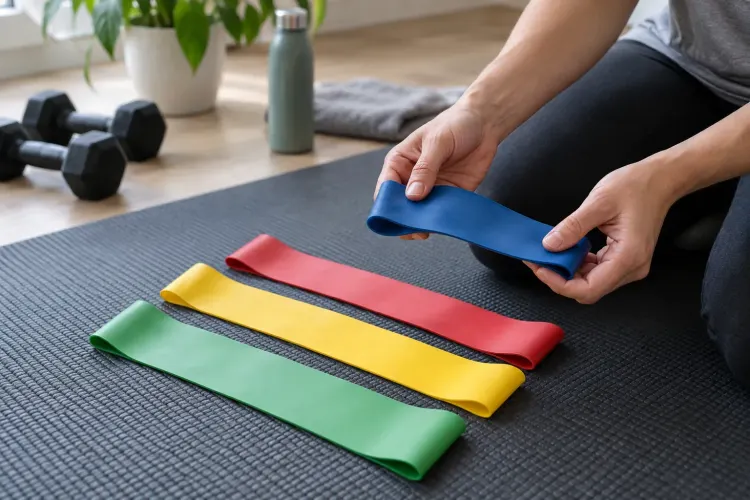
Getting stronger with resistance bands: track more than the color
Make a home band workout repeatable, know when to progress it, and check the equipment without treating a color as a universal weight.

Strength training has stalled: what to check before changing programs
Use your training record to separate one bad session from a plateau, then change a manageable part of the plan without chasing soreness.