Signs of low testosterone: what they mean and when to get tested
The signs of low testosterone in men, why they are easy to misread, and how the diagnosis is confirmed. Test before you assume.

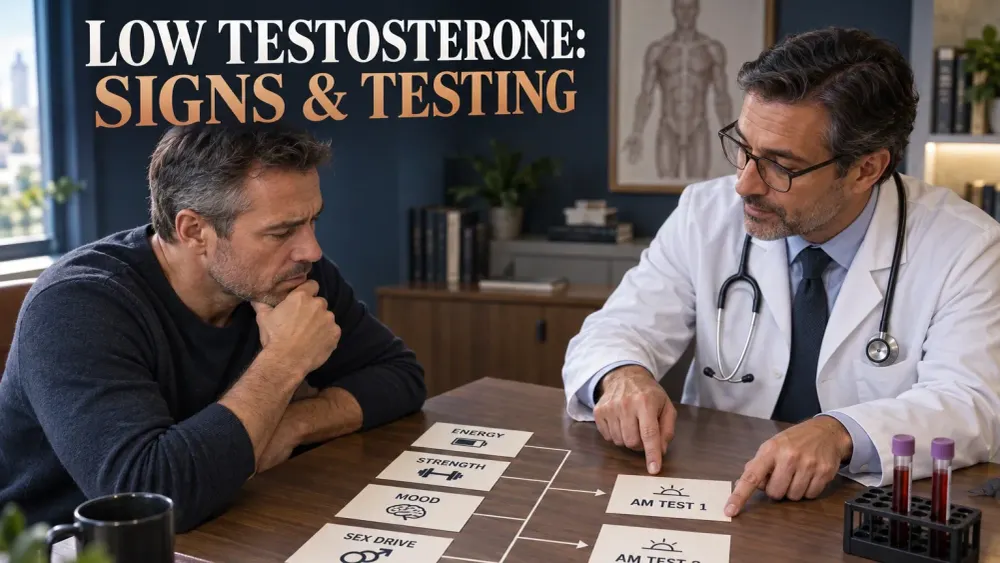

Low sex drive, fewer morning erections and persistent erection problems can occur with low testosterone. Tiredness, low mood and changes in body composition can also occur, but symptoms alone cannot confirm the cause.
Sleep problems, medicines, stress and other conditions can produce similar symptoms. A clinician assesses the pattern and, when appropriate, confirms a low testosterone result with repeat blood tests.

The signs most linked to low testosterone
Cleveland Clinic lists sexual symptoms as the most specific symptoms of low testosterone, but none establishes the diagnosis on its own.
The more telling signs involve sexual function and the body's direct response to the hormone:
- Lower sex drive than usual
- Fewer morning or spontaneous erections
- Trouble getting or keeping an erection
- Shrinking testicles
- Loss of body or facial hair
- Hot flushes
Other symptoms overlap with many conditions:
- Ongoing tiredness and low energy
- Low mood, irritability or trouble concentrating
- More body fat, especially around the middle
- Less muscle and strength
- Enlarged breast tissue (gynecomastia)
Tiredness and low mood alone do not distinguish testosterone deficiency from other conditions. Persistent sexual symptoms are a reason to discuss assessment, but their presence does not establish the cause.
Low sperm count or difficulty conceiving can also prompt investigation. Bone loss, low-trauma fractures or unexplained anemia may lead a clinician to check testosterone even without sexual symptoms.

Why these symptoms are so easy to misread
Medicines and other conditions can cause symptoms similar to those associated with low testosterone, as Mayo Clinic explains.
Some common look-alikes can also contribute to a low level. Well-supported categories include obesity and type 2 diabetes, sleep disorders, acute or serious illness, and certain drug exposures. Other problems, including stress or antidepressant adverse effects, may imitate the symptoms without proving biochemical testosterone deficiency.
- Obesity and type 2 diabetes
- Sleep disorders, including obstructive sleep apnea
- Acute or serious illness
- Opioids and glucocorticoids
- Anabolic-androgenic steroid use or withdrawal
- Heavy alcohol use, which can affect the testes, central signalling or both
Symptoms and low testosterone can share contributors, including obesity, sleep disorders and some medicines. Addressing a contributor may help when it explains the problem, but improvement is not guaranteed. Raising testosterone naturally discusses those contributors and the limits of the evidence.
How low testosterone is diagnosed
You cannot diagnose low testosterone from how you feel, and you should not diagnose it from a single blood test either.
A clinician first reviews your symptoms, health history and medicines and may examine your testes, body hair and breast tissue. Testing then helps assess whether testosterone deficiency is present:
- Have total testosterone measured early in the morning. The AUA requires two measurements on separate mornings. The Endocrine Society and the 2026 EAU guideline specify fasting samples; the EAU uses 7–10 a.m. A night-shift worker should ask how to time the sample after an adequate sleep period.
- Repeat a low result on a separate morning, preferably under comparable conditions and when you are not acutely ill. Day-to-day variation means one low reading cannot establish the diagnosis.
- Interpret the result with symptoms or signs. The AUA uses total testosterone below 300 ng/dL as a reasonable supporting cut-off, not a diagnosis by itself.
- If total testosterone is borderline or SHBG may be altered, a clinician may assess SHBG and an accurately measured or calculated free testosterone result.
- Once low testosterone is confirmed, the AUA recommends measuring LH. It recommends prolactin when LH is low or low-normal; other findings may lead to further cause-specific tests.
One reading on its own cannot diagnose testosterone deficiency. A symptom quiz cannot replace properly timed laboratory testing. Our guide to the testosterone blood test explains total versus free testosterone, SHBG and how clinicians investigate a confirmed low result.
Could it be low testosterone, or something else?
These patterns can help you describe your symptoms at an appointment. They cannot show whether testosterone or another condition is the cause.
| What you notice | What it can mean | What to discuss |
|---|---|---|
| Low drive, fewer morning erections and ED together | This cluster is associated with low testosterone, but does not establish the cause. | Ask whether testosterone testing is appropriate; vascular, medication, sleep and psychological factors can overlap. |
| Tiredness with no sexual changes | Tiredness alone does not distinguish low testosterone from other conditions. | Discuss sleep, mood, medicines and whether other tests are needed. |
| Weight gain around the middle | Obesity can contribute to low testosterone; body shape cannot diagnose it. | Discuss weight changes, sleep and metabolic health. |
| Low mood and poor focus | These symptoms have many possible causes. | Discuss mood, sleep, alcohol and medication effects. |
| Shrinking testicles or loss of body hair | These changes can occur with testosterone deficiency and need assessment. | Ask for a physical examination rather than assuming the cause from appearance. |
The EAU guideline cautions that these symptoms are not exclusively specific to hypogonadism.
Causes of low testosterone
There are two broad types.
Primary means the testicles themselves are not producing enough. Causes include injury, some genetic conditions, chemotherapy or radiation.
Secondary means the signal from the brain, through the pituitary gland and hypothalamus, is too low. Causes include pituitary or hypothalamic disease and functional suppression associated with obesity, serious illness or some medicines, including opioids and glucocorticoids.
Many functional contributors, particularly obesity and some illness or medication effects, can suppress hypothalamic-pituitary signalling and may be reversible. Heavy alcohol use can affect the testes, central signalling or both, so the cause cannot be assigned from symptoms alone.

When to see a doctor
Book an appointment, rather than reaching for a supplement, if:
- The sexual signs persist or cluster together (low drive, fewer morning erections and difficulty with erections)
- Symptoms are affecting your work, mood or relationship
- You notice shrinking testicles, loss of body hair, or breast tissue changes
- Erections are a persistent problem. Erectile difficulty deserves medical assessment because vascular, metabolic, medication, hormonal and psychological causes can overlap.
- You are having difficulty conceiving
Our symptom checker applies the ADAM questionnaire’s screening rule; it cannot identify the cause of symptoms. Ask for a morning testosterone test before you spend money on pills. Evidence for marketed testosterone boosters is weak and ingredient-specific, and treating the wrong problem only delays the fix. When the levels are genuinely low, a doctor can look at why and talk you through the options, including whether testosterone replacement is a sensible fit for you.
If symptoms persist or affect your daily life, book an assessment. Bring a list of your medicines, relevant health conditions and any previous test results. A clinician can decide whether testosterone testing or another investigation is appropriate.
Frequently asked questions
What counts as a low testosterone level?
The AUA uses total testosterone below 300 ng/dL as a reasonable diagnostic cut-off, provided it is found on two separate early-morning tests and occurs with compatible symptoms or signs. Other guidelines do not use one universal number, so the assay, laboratory reference range and, when indicated, free testosterone and SHBG also affect interpretation. A number alone cannot explain symptoms or establish the diagnosis.
Can low testosterone be reversed?
Sometimes. If obesity, inadequate sleep, acute illness, heavy alcohol use or a medicine is contributing, addressing that factor may improve the level, but recovery is not guaranteed. Do not stop a prescribed medicine on your own. Persistent primary testicular disease or structural pituitary or hypothalamic disease needs clinician-led evaluation and may require long-term treatment.
Do I need testosterone replacement therapy?
Not automatically. TRT is considered only after compatible symptoms or signs and consistently low testosterone are confirmed and the cause is assessed. Reversible contributors should be addressed first when they explain the low level. A clinician should discuss treatment benefits, risks, monitoring and fertility plans with you.
When is the best time to test testosterone?
Have a diagnostic total testosterone test early in the morning, commonly between 7 and 10 a.m. The Endocrine Society and EAU specify a fasting sample. Repeat a low result on a separate morning under comparable conditions, and avoid testing during acute illness. Night-shift workers should ask a clinician or laboratory how to time testing after adequate sleep.
Read next

TRT explained honestly: who it helps, what it costs, what to ask
Testosterone replacement is a real treatment for a real diagnosis. What the trials show it does and does not fix, the trade-offs, and how to spot a bad clinic.
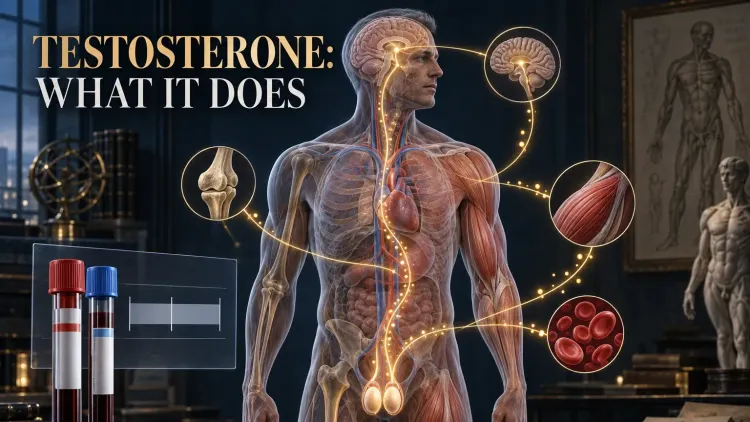
Testosterone: what it does, what is normal, and what really changes with age
Testosterone results need context. Learn what the hormone does, how total and free levels differ, what ranges mean and when repeat testing is useful.

How to raise testosterone naturally: what the evidence supports
How to confirm low testosterone and address weight, sleep, alcohol, medicines and deficiencies without relying on unsupported booster claims.