Low sex drive in men: the causes worth checking first
A practical guide to low libido in men: medication, mood, relationships, sleep, thyroid, prolactin, diabetes, testosterone and when to seek care.


A lower sex drive is a symptom, not a diagnosis. It can reflect stress, depression, relationship strain, poor sleep, a medicine, a medical condition or a hormone problem. Several causes can be present at the same time.
The useful first move is to identify what changed and when. That timeline often tells a clinician more than a random supplement panel or a single testosterone result.
Start with the timeline
Desire that has gradually changed over several years needs a different review from desire that dropped soon after a new prescription, an illness or a difficult period at home.
Write down when you last felt normal and what changed in the weeks or months around it. Include new medicines, dose changes, sleep disruption, work pressure, low mood, weight change, pain, erectile problems and relationship conflict. Also note whether sexual thoughts have fallen in every setting or mainly with one partner or situation.
The European Association of Urology guideline recommends a biopsychosocial assessment. In plain language, that means reviewing health, hormones, medicines, mood, sexual function and the relationship rather than assuming one cause from one symptom.
First separate desire, erections and orgasm
These problems can overlap, but they are not interchangeable:
| What changed | What it can suggest | A useful starting point |
|---|---|---|
| Less interest, but erections are possible when interest appears | Mood, stress, relationship factors, sleep, medicines or a medical condition | Timeline, medication review and broader health review |
| Interest is present, but erections are unreliable | Vascular, metabolic, neurologic, medication or anxiety-related factors | Assessment for erectile dysfunction and cardiovascular risk |
| Orgasm is delayed or absent | Medicines, especially some antidepressants, neurologic factors or other sexual dysfunction | Medication and sexual-function review |
| Desire and erections both declined | There are several possibilities, including depression, diabetes, vascular disease and hormone problems | Clinical review rather than assuming testosterone is the cause |
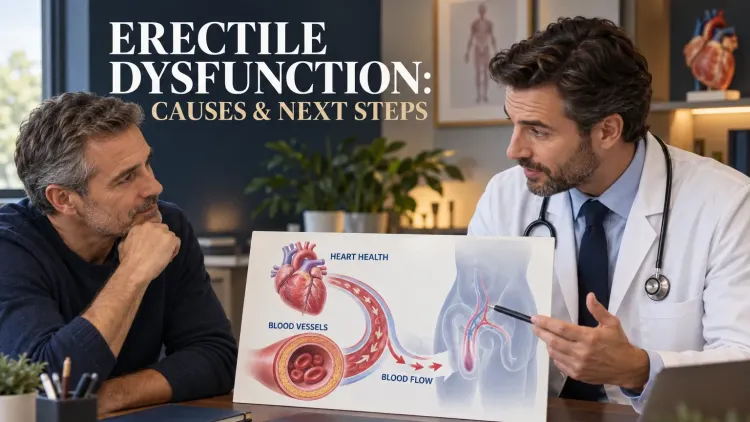
The National Institute of Diabetes and Digestive and Kidney Diseases lists diabetes, heart and blood-vessel disease, obesity, low testosterone, medicines and mental health factors among the causes of erectile dysfunction. If interest is intact but erections have changed, our guide to erectile difficulty is the more relevant starting point.
Medicines can affect different parts of sexual function
A new medicine or dose change is especially relevant when symptoms start within days or weeks. Antidepressants are a common concern, but it helps to name the exact problem.
A 2026 systematic review of randomized trials found that selective serotonin reuptake inhibitors had clearer evidence for difficulty reaching orgasm than for reduced desire. In the pooled placebo-controlled data, the increase in low desire did not reach statistical significance, while the increase in orgasm difficulty did (European Journal of Clinical Pharmacology, 2026). That does not rule out a libido effect in an individual. It shows why the conversation should distinguish interest, arousal, erections and orgasm.
Some blood-pressure medicines, opioids and other long-term treatments can also affect sexual function, but the effect depends on the drug and on which sexual domain changed. The illness being treated can contribute too.
Do not stop a prescribed medicine on your own. Tell the prescriber what changed, when it changed and which part of sexual function is affected. A dose review or alternative may be possible, but it should be a shared decision that also protects the condition being treated.
Mood, stress and relationships belong in the medical review
Depression can reduce interest in sex and in other activities. Anxiety can keep attention fixed on performance. Conflict, loss of trust, pain during sex or a mismatch in desire can make the problem specific to a relationship even when desire is present elsewhere.
This is not a reason to dismiss the symptom as psychological. The EAU guideline places psychological, relationship and biological factors in the same assessment because they often interact. A clinician needs to know whether low mood came before the loss of desire, whether treatment changed it and whether the problem is general or situational.
If you have thoughts of self-harm, seek urgent help rather than waiting for a routine libido appointment.
Sleep, alcohol and metabolic health
Poor or fragmented sleep can reduce energy, mood and opportunity for sex. Loud snoring, witnessed pauses in breathing, morning headaches or marked daytime sleepiness are worth mentioning because they may point to a sleep disorder that needs its own assessment.
Heavy drinking is included among the causes of low libido in the NHS guidance. Alcohol may also worsen erections, sleep and mood. The useful question is whether drinking increased around the same time as the symptom, not whether one evening made you feel more relaxed.
Diabetes, obesity and cardiovascular disease can affect sexual function through several routes. Excessive thirst, frequent urination, unexplained weight change or new erectile problems are reasons to discuss metabolic testing rather than treating libido in isolation.

When hormone testing makes sense
Low desire can be part of testosterone deficiency, but it does not diagnose it. The Endocrine Society guideline recommends diagnosing hypogonadism only when compatible symptoms or signs occur with unequivocally and consistently low testosterone. It recommends confirming a low result with a repeat morning fasting measurement.
Fewer morning erections can add context, but they do not prove low testosterone. Depression, poor sleep, erectile dysfunction and normal variation can change the same pattern. Our guides to the signs of low testosterone and the testosterone blood test explain why symptoms and repeat measurements have to be interpreted together.
Testosterone is not the only hormone that matters. The EAU guideline says prolactin and thyroid hormones may be checked when symptoms suggest an endocrine cause. High prolactin can suppress desire and reproductive hormones. Thyroid disease can alter mood, energy, weight and sexual function. The clinician may also use luteinizing hormone and other tests to work out where a confirmed testosterone problem begins.
In the Testosterone Trials, testosterone treatment improved sexual activity, desire and erectile function in older men who had both low sexual function and repeatedly low testosterone (Journal of Clinical Endocrinology & Metabolism, 2016). Those results apply to a selected group with documented low levels. They do not show that testosterone treats every case of low libido.
What a clinician may check
There is no universal low-libido blood panel. Testing should follow the history and examination. Depending on the pattern, a clinician may consider:
- two morning testosterone measurements if deficiency is suspected;
- prolactin and thyroid tests when the symptoms or examination support them;
- glucose or HbA1c when diabetes risk or symptoms are present;
- other blood tests for anaemia, liver disease or another condition when the wider history points there;
- a focused review of mood, sleep, erections, orgasm, medicines and relationship factors.
Testing everything at once can create borderline results that do not explain the symptom. A targeted work-up is more useful than treating any number outside a laboratory range as the answer.
When to book an appointment sooner
Arrange a medical review if the change persists, causes distress, affects a relationship or followed a new medicine. Mention it sooner if it comes with erectile problems, marked low mood, breast discharge, a testicular lump or pain, severe headaches, vision changes, unexplained weight change, excessive thirst or frequent urination. These signs do not prove one diagnosis, but they change what should be checked.
Bring a short timeline, your full medicine and supplement list, typical alcohol intake, usual sleep hours, mood changes and a clear description of whether the problem is desire, erections, orgasm or more than one of them.
Frequently asked questions
What can cause a low sex drive in men?
Common contributors include stress, depression, relationship strain, poor sleep, sexual difficulties, heavy drinking, medicines and medical conditions. Low testosterone, high prolactin, thyroid disease and diabetes are among the possibilities, but symptoms overlap and the cause cannot be identified from libido alone.
Can antidepressants lower sex drive?
They can affect sexual function, but the pattern varies. SSRIs have clearer evidence for orgasm problems than for loss of desire itself. Do not stop an antidepressant suddenly. Tell the prescriber what changed and when so that benefits, dose and alternatives can be reviewed safely.
Does low libido mean low testosterone?
No. Low desire can be part of testosterone deficiency, but diagnosis requires compatible symptoms or signs plus consistently low morning testosterone on repeat testing. A single symptom, one blood result or fewer morning erections does not establish the diagnosis.
When should a man see a doctor about low libido?
Book an appointment if the change persists, causes distress, affects a relationship, follows a new medicine or comes with erectile problems, low mood, breast discharge, testicular changes, headaches, vision changes, marked weight change, excessive thirst or frequent urination. Seek urgent help for thoughts of self-harm.
References
- Low sexual desire and male hypoactive sexual desire disorder · European Association of Urology
- Low sex drive (loss of libido) · NHS
- Testosterone therapy in men with hypogonadism · Endocrine Society
- Erectile dysfunction · National Institute of Diabetes and Digestive and Kidney Diseases
- Sexual dysfunction associated with selective serotonin reuptake inhibitors in adults with depression · European Journal of Clinical Pharmacology, 2026
- Testosterone treatment and sexual function in older men with low testosterone levels · Journal of Clinical Endocrinology & Metabolism, 2016