Belly fat in men: why your waist matters more than your weight
Waist size can reveal risk that the scale and BMI miss. What visceral fat does, how to measure it properly, and which changes reduce it.

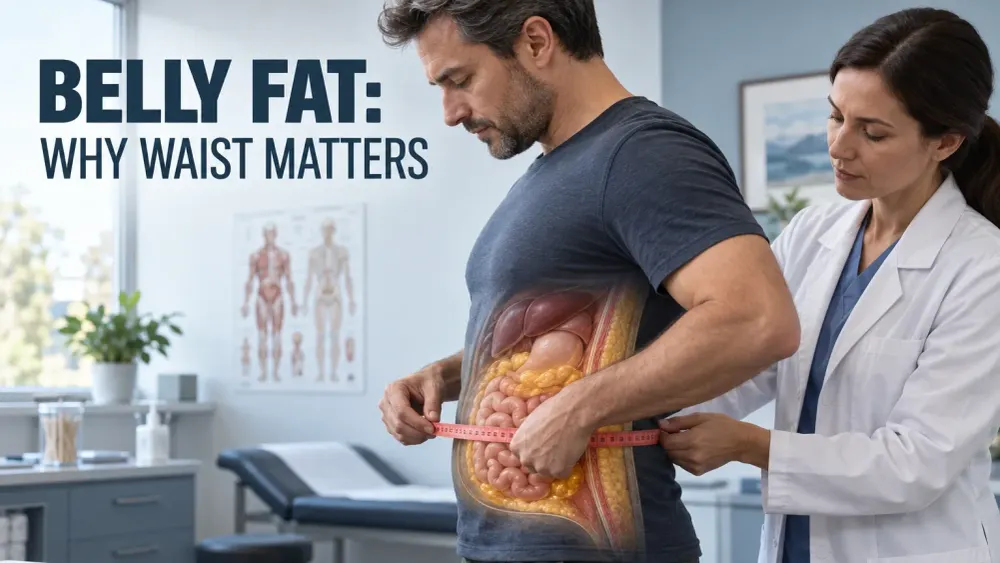
A larger waist can reveal risk that body weight alone does not show. Two men can have the same weight or body mass index and carry fat in very different places. That is why a tape measure belongs beside the scale, not in place of it.
Waist size is a practical marker of central adiposity. It cannot tell you exactly how much visceral fat you have, and it cannot diagnose diabetes, fatty liver or hormone problems. It can show when the wider picture deserves attention.
Key takeaways
- Use waist with weight and BMI. Central-fat measures remain associated with all-cause mortality after accounting for BMI, but the figures describe populations rather than one man's future.
- Measure in a repeatable way. NICE advises measuring midway between the bottom of the ribs and the top of the hips after a natural breath out.
- Fat loss is not ordered on command. Exercise and calorie restriction can reduce visceral fat, but no study can promise that your waist will change before your weight.
- A larger waist is a prompt, not a verdict. Review blood pressure, glucose, lipids, sleep, medicines and symptoms with the wider clinical picture.
Why waist adds information beyond weight and BMI
A 2020 meta-analysis included 72 prospective cohort studies and 2,528,297 participants. After accounting for BMI, each additional 10 cm of waist circumference was associated with a hazard ratio of 1.11 for all-cause mortality. Each 0.1 increase in waist-to-height ratio was associated with a hazard ratio of 1.24 (BMJ meta-analysis).
A hazard ratio is a relative measure across groups over time. It is not an 11% or 24% prediction for a particular person, and it does not prove that waist size itself caused every outcome. The practical point is narrower: where fat is carried adds information that total weight and BMI can miss.
That also explains why a normal BMI does not rule out central adiposity. Our BMI calculator is useful for screening, but BMI cannot separate muscle from fat or show fat distribution. A body-fat estimate answers a related question, while waist-to-height ratio focuses on central size.
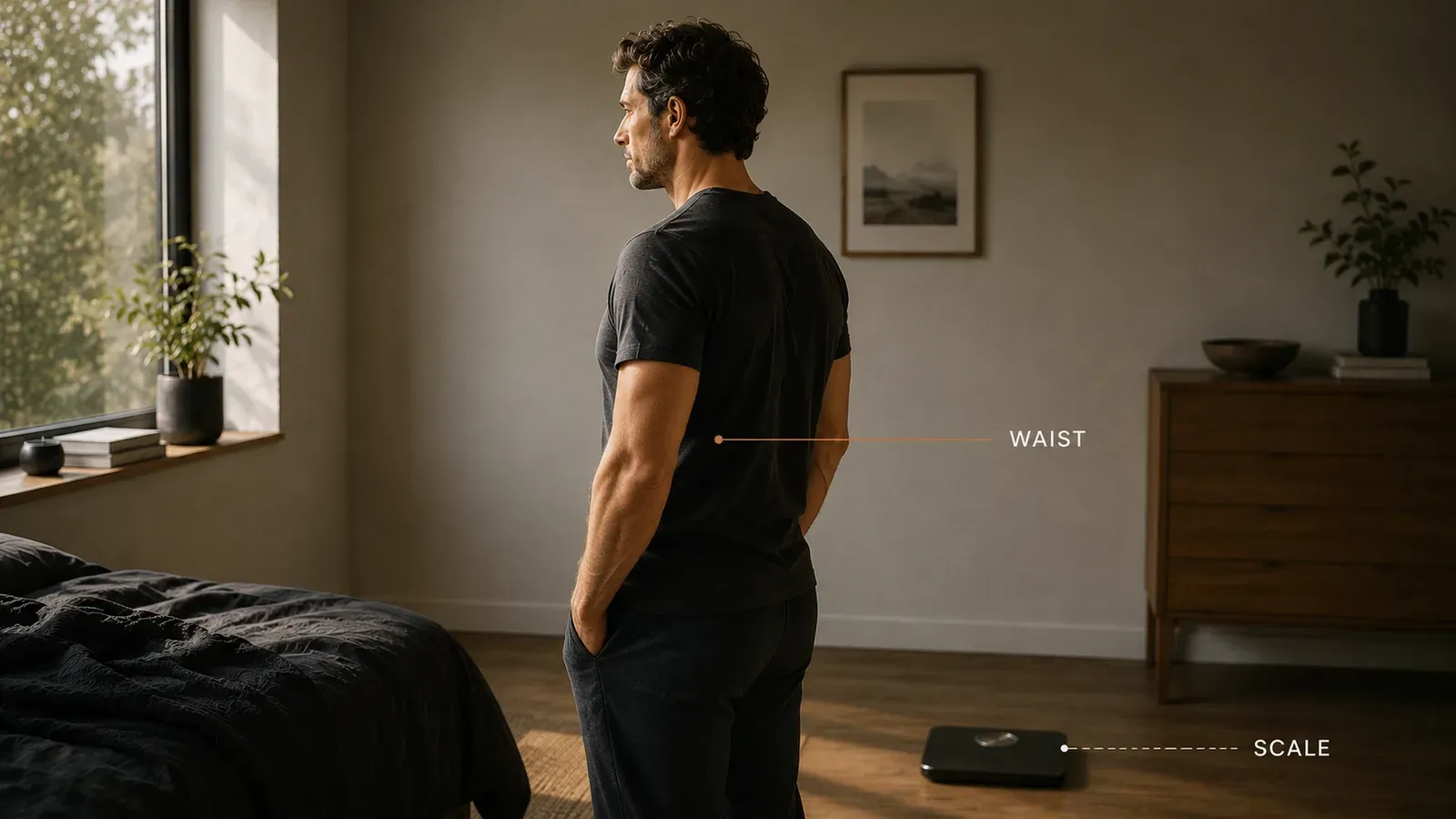
What belly fat is actually measuring
The fat you can pinch under the skin is subcutaneous fat. Visceral fat sits deeper within the abdomen around internal organs. Ectopic fat can also accumulate in organs such as the liver. These depots differ in biology and cardiometabolic relevance, but none can be identified accurately by whether a belly feels firm or soft (2026 review of adipose-tissue distribution).
A tape measure is an indirect marker. CT and MRI can measure visceral adipose tissue more directly, while DXA can provide a more accessible estimate in some settings. Imaging is not routinely needed just because a waist measurement is high; clinicians use it when the result would change management (2026 imaging review).
Visceral and ectopic fat are associated with insulin resistance, abnormal lipids, higher blood pressure and fatty liver. A waist measurement does not tell you which of those conditions is present, so the next useful step is often checking the relevant clinical numbers.
How to measure your waist properly
Do not use trouser size. Stand upright, place the tape against the skin midway between the bottom of the ribs and the top of the hips, keep it horizontal, and read the number after breathing out naturally. Do not pull the tape tight enough to compress the skin (NICE NG246).
Measure under similar conditions each time. The same location, time of day and tape tension matter more than checking daily. A monthly trend is usually easier to interpret than small day-to-day shifts from food, posture or bloating.
For adults with a BMI below 35, NICE uses these waist-to-height categories:
- 0.4 to 0.49: healthy central adiposity.
- 0.5 to 0.59: increased central adiposity and increased health risk.
- 0.6 or above: high central adiposity and further increased health risk.
The simple screening message is to keep your waist below half your height. These categories guide assessment and are not diagnoses. The waist-to-height calculator does the division, but the result still needs context, especially when BMI is 35 or higher, pregnancy is relevant, or abdominal swelling is not caused by fat.
What reduces visceral fat and waist circumference
The reliable approach is a sustainable energy deficit plus regular activity, with enough protein and resistance training to help preserve muscle. There is no separate diet or exercise that burns only abdominal fat.
A meta-analysis of 40 randomised trials involving 2,190 adults with overweight or obesity found that both exercise and calorie restriction reduced visceral fat measured by CT or MRI. A dose-response relationship was supported for exercise, while the calorie-restriction studies did not show the same dose-response pattern (British Journal of Sports Medicine).
A second meta-analysis of 25 randomised trials and 1,686 participants found that aerobic exercise reduced waist circumference by an average of 3.2 cm versus control. That average does not promise the same result for every programme or person (Obesity Reviews).
- Create a manageable deficit. The calorie calculator can estimate maintenance needs, but the starting figure is only an estimate and should be adjusted against the trend.
- Move regularly. Aerobic activity has direct trial evidence for reducing waist circumference. Resistance training supports strength and muscle retention.
- Keep protein adequate. Our protein guide explains food sources and why needs depend on body size, activity, health and total intake.
- Protect muscle while losing weight. The guide to muscle loss with age explains why scale weight alone is a poor target.
- Build a plan you can repeat. A smaller, sustained change beats an aggressive cut that strips away training, sleep and ordinary meals.

Can waist shrink without much change on the scale?
It can happen, particularly when fat loss occurs alongside muscle gain or retention, but it is not guaranteed. Waist and weight measure different changes and are affected by different short-term noise. In some people the tape changes first; in others scale weight changes first; sometimes both stall for a period.
Track both under similar conditions and judge the trend over several weeks. Avoid treating one measurement as proof that a plan is working or failing.
Belly fat and testosterone: a more careful explanation
Obesity is often accompanied by lower sex hormone-binding globulin, known as SHBG, and lower measured total testosterone. A 2025 clinical review argues that proportionately lower testosterone and SHBG with normal LH and FSH can represent obesity-related pseudo-hypogonadism rather than irreversible disease of the hypothalamic-pituitary-testicular axis (Journal of Clinical Endocrinology & Metabolism).
The relationship is more complicated than a simple two-way loop. Adipose-tissue aromatase can convert androgens to estrogens, but the degree to which estradiol suppresses the reproductive axis in men with obesity is not fully established (review of obesity-related male hypogonadism). Symptoms such as fatigue, reduced libido and low mood also overlap with sleep apnoea, depression, diabetes, medication effects and under-recovery.
Weight loss is associated with higher testosterone on average. A meta-analysis of 24 studies found that low-calorie diets in men with obesity were associated with a mean total-testosterone increase of 2.87 nmol/L, about 83 ng/dL (European Journal of Endocrinology). That is an average association across studies, not an individual promise.
Do not diagnose low testosterone from waist size or symptoms alone. A current review describes diagnosis as requiring compatible symptoms plus at least two fasting morning testosterone samples collected between 7 and 10 a.m. (adult male hypogonadism review). Our guides to low testosterone and raising testosterone naturally explain the testing sequence and the limits of lifestyle claims.
Sleep and alcohol matter, but the claims need limits
Short sleep can make appetite control harder. Small controlled studies found more hunger or greater snack intake during sleep restriction, although hormone findings were not identical across studies (Annals of Internal Medicine; American Journal of Clinical Nutrition). Evidence for a consistent testosterone reduction is mixed: randomised studies in healthy young men did not establish a uniform adverse effect (Sleep Health). If loud snoring, witnessed pauses in breathing or unrefreshing sleep are present, the persistent tiredness guide explains why sleep apnoea deserves assessment.
Alcohol supplies energy, but observational evidence does not justify saying that alcohol directly causes abdominal obesity in every drinker. A meta-analysis of 127 observational studies found no significant association with abdominal obesity in cohort studies, while cross-sectional studies did find an association. Heavy drinking versus non-drinking or light drinking was associated with odds ratio 1.25 for abdominal obesity (systematic review and dose-response meta-analysis).
The calorie arithmetic is still relevant. The NHS lists up to 158 kcal in a standard 175 ml glass of 12% wine and up to 222 kcal in a pint of 5% beer. It advises men and women not to regularly drink more than 14 units a week, spread over at least three days (NHS alcohol guidance). Cutting back can make an energy deficit easier and may improve sleep, but it is not a targeted abdominal-fat treatment.

What does not work
- Spot reduction. Crunches and planks can train abdominal muscles, but they do not select the fat depot used for energy.
- Waist trainers, sweat belts and sauna suits. A temporary change from fluid loss is not a reduction in visceral fat.
- Detox teas and cleanses. They do not have credible evidence for selectively reducing abdominal or visceral fat.
- Fat burners and testosterone boosters. The marketing claim is larger than the human evidence. See the ingredient-by-ingredient review of testosterone boosters.
- Extreme cuts without resistance training or adequate protein. Faster scale loss can include more lean tissue, which is a poor trade if strength and long-term adherence fall.
What to review with a clinician
A larger waist is a reason to look at the wider metabolic picture. Depending on age, symptoms, medicines and medical history, that can include blood pressure, HbA1c or fasting glucose, a lipid panel and liver assessment when fatty liver is suspected.
Erectile dysfunction belongs in the same conversation because it can precede clinically apparent cardiovascular disease in some men. An umbrella review reported a relative risk of 1.45 for cardiovascular disease among men with erectile dysfunction (BJU International umbrella review). Relative risk is not the same as a 45 percentage-point risk and does not establish the cause in one person. New or persistent symptoms deserve assessment; our erectile dysfunction guide explains what the first review usually covers.

When to seek medical review sooner
- Rapid abdominal swelling, a newly hard or markedly distended abdomen, severe pain, vomiting or breathlessness.
- A growing waist while body weight is falling without trying.
- Thirst, frequent urination, blurred vision or unexplained fatigue that could fit high blood glucose.
- A waist-to-height ratio of 0.6 or above, especially with high blood pressure, abnormal glucose, lipid problems or symptoms of sleep apnoea.
- New erectile dysfunction, chest discomfort, fainting or reduced exercise tolerance.
The tape cannot diagnose the cause, but it can tell you when guessing is no longer useful. Measure consistently, pair the number with weight and health markers, and choose changes that can survive ordinary life.
Frequently asked questions
Why does belly fat matter more than total weight?
Waist measures central fat distribution, which adds information that weight and BMI can miss. In a meta-analysis of 72 prospective studies, each additional 10 cm of waist circumference was associated with a hazard ratio of 1.11 for all-cause mortality, and each 0.1 increase in waist-to-height ratio with a hazard ratio of 1.24, after accounting for BMI. These are population associations, not individual predictions.
What waist size is too big for a man?
For adults with a BMI below 35, NICE classifies a waist-to-height ratio of 0.4 to 0.49 as healthy central adiposity, 0.5 to 0.59 as increased central adiposity and increased health risk, and 0.6 or above as high central adiposity with further increased risk. The categories guide assessment; they are not diagnoses.
Does belly fat lower testosterone?
Obesity is often accompanied by lower sex hormone-binding globulin and lower measured total testosterone, but this does not automatically mean pathological hypogonadism. Weight loss is associated with higher testosterone on average, yet diagnosis still requires compatible symptoms and repeated properly timed blood tests.
How do you lose visceral fat specifically?
You cannot spot-reduce visceral fat or choose the order in which fat depots change. Randomised trials show that exercise and calorie restriction can reduce visceral fat, and aerobic exercise can reduce waist circumference on average. Track waist, weight and habits together because individual responses differ.
References
- Central fatness and risk of all-cause mortality: systematic review and dose-response meta-analysis - BMJ, 2020.
- Identifying and assessing overweight, obesity and central adiposity - NICE NG246.
- Exercise, caloric restriction and visceral adiposity: systematic review and meta-analysis - British Journal of Sports Medicine, 2023.
- Aerobic exercise and waist circumference: systematic review and meta-analysis - Obesity Reviews, 2022.
- Low testosterone concentrations in men with obesity - Journal of Clinical Endocrinology & Metabolism, 2025.
- Weight loss and obesity-associated hypogonadotropic hypogonadism: systematic review and meta-analysis - European Journal of Endocrinology, 2013.
- Alcohol intake and overweight and obesity: systematic review and dose-response meta-analysis - Critical Reviews in Food Science and Nutrition, 2022.
- Erectile dysfunction and cardiovascular disease: umbrella review - BJU International, 2021.
Last reviewed: 19 September 2026. See our corrections policy.